
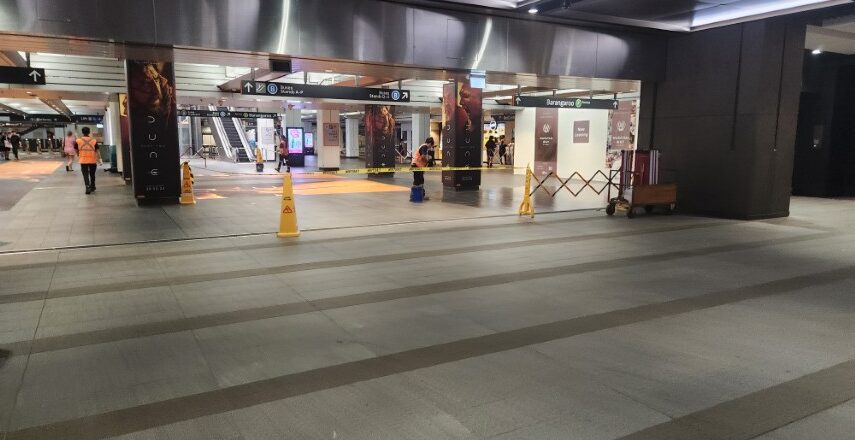
Floor cleaning and risk management
Everywhere a sign
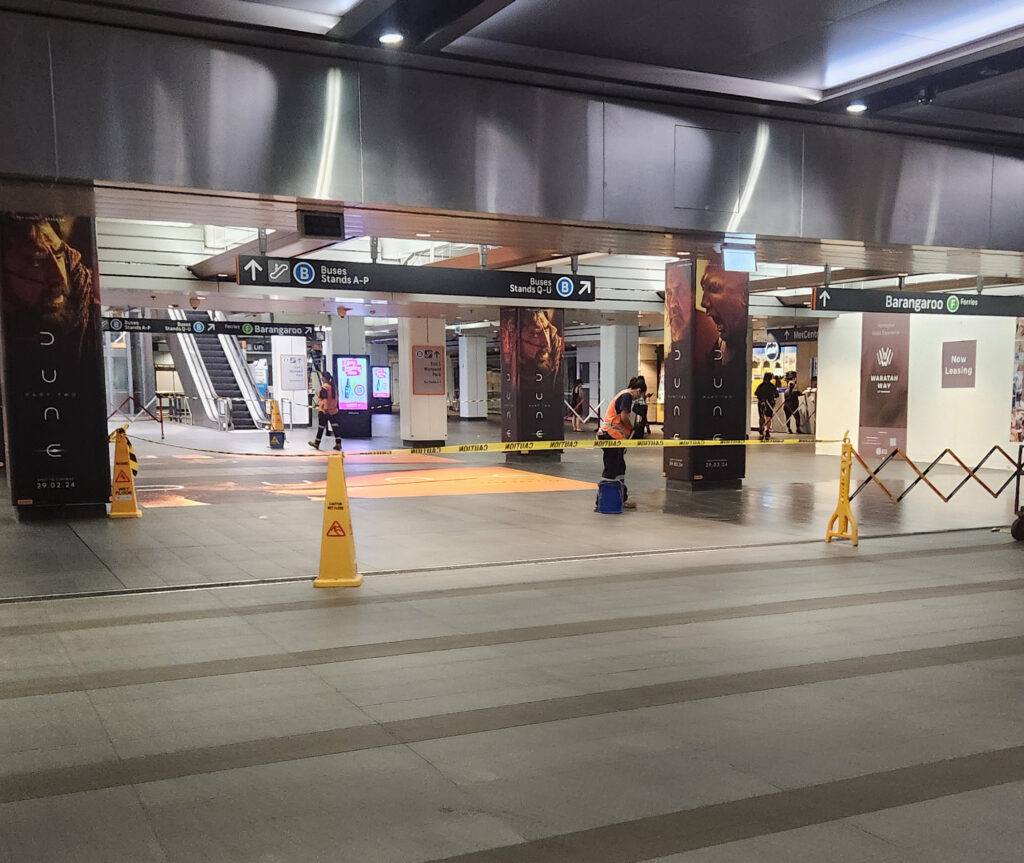
The adjacent image shows a cleaner working on a “slippery when wet” floor, with an area cordoned off and signage placed.
The cleaner is also using a fabric head mop. When a fabric mop is being used, it is unlikely that the floor is rinsed afterwards, resulting in a solution of detergent and dirty water being spread around by the dirty mop and then left to dry.
Risk factors /issues associated with this kind of cleaning operation
- Floor is slippery enough that barriers are required to cordon off any wet areas
- When are the barriers removed? How dry does the floor need to be beforehand? Who makes this decision?
- The cleaning process (detergent level, rinsing, frequency of cleaning) can increase the risk of someone slipping, even after the floor is dry, if not done correctly
- Areas that have been poorly cleaned and/or not rinsed, often have a build-up of dried out soil and detergent. If these areas become wet from a spill or tracked-in water, the contamination can make the floor even more slippery
Selecting a product with the right amount of slip resistance for the application, accompanied by an appropriate cleaning regime, will always be simpler than trying to manage risk with signage.
The smarter choice: slip resistant porcelain tiles
The risk to patrons of slipping on floor that is wet from a recent cleaning should be managed from the beginning by selecting a tile with the right amount of slip resistance. In a high traffic area, like that of a transport hub concourse, a P5 rated tiles that performed well after accelerated wear testing is ideal.
Cleaning Metz Sicodur® and Metz MicroGRIP® floors
Metz MicroGRIP® and Sicodur® highly slip resistant tiles provide sufficient slip resistance to be wet cleaned while remaining operational. Staff and users in general will be able to traverse the area being cleaned with a minimal risk of slipping. All MicroGRIP® and Sicodur® are porcelain and therefore non-staining.
Latest News
Transport Infrastructure Product Selection Guide: Tiles
Slip resistant tiles for transport hubs, airports, train stations & more
Key considerations for designers and specifiers
Level of service duty
Transport infrastructure projects are ...
Sustainable Slip Resistance
What is sustainable slip resistance?
Put simply, this is the level of slip resistance that can be reasonably expected to be sustained over ...

Andrew (Boy) Charlton Pool Re-Tile and Restoration Project, Sydney CBD
Metz Project Services completed a re-tile & restoration project at iconic Sydney CBD landmark Andrew (Boy) Charlton Pool in 2025.
The extensive remediation ...